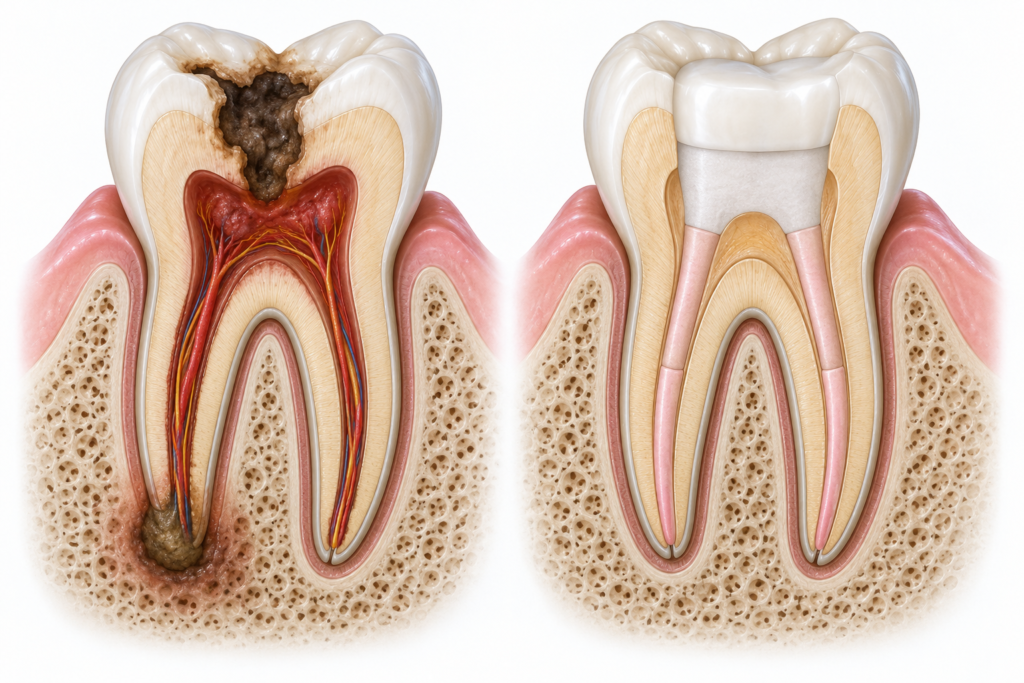
Not every toothache requires a root canal. A dental examination is needed to identify what is causing the discomfort and determine the appropriate treatment.
Some signs that may indicate a problem with the tooth’s pulp include:
- Persistent or severe toothache
- Sensitivity to hot or cold that lingers
- Pain when biting or chewing
- Swelling around the affected tooth
- Tender or swollen gums
- A darkened or discoloured tooth
- A recurring dental abscess
- A cracked or damaged tooth
Sometimes, an infected tooth may not cause significant pain. This is why an examination is important when there are changes in the appearance or condition of a tooth.
What Happens During a Root Canal?
The treatment begins with an assessment of the affected tooth. Your dentist will examine the tooth and determine whether root canal treatment is appropriate.
If a root canal is recommended, the general stages may include:
Examination and Diagnosis
Your dentist first identifies the source of the pain or infection. Dental imaging may be used when needed to assess the tooth and surrounding structures.
Numbing the Tooth
Local anaesthesia is used to numb the area before treatment. This helps keep the procedure as comfortable as possible.
Removing the Infected Pulp
An opening is made in the tooth so the affected pulp can be removed from inside the tooth.
Cleaning and Sealing
The inside of the tooth is cleaned and disinfected before the space is sealed to help prevent further infection.
Restoring the Tooth
After the root canal, the tooth may require a filling or crown depending on its condition and the amount of tooth structure remaining. Your dentist will recommend the appropriate restoration to help protect the treated tooth.
Does a Root Canal Hurt?
The purpose of root canal treatment is to treat the source of infection or inflammation that may be causing significant tooth pain. Local anaesthesia is used during the procedure, and modern root canal treatment is generally performed with the goal of keeping the patient comfortable.
Some tenderness or sensitivity may occur after treatment as the surrounding area settles. If you experience severe or worsening discomfort after your appointment, contact your dental office for guidance.
Why Treat an Infected Tooth?
Delaying treatment for a tooth that requires a root canal may allow an infection to progress. Depending on the condition of the tooth, this can lead to increased pain, swelling, or damage to surrounding tissues.
Treating the tooth can help:
- Remove infected or inflamed pulp
- Address the source of dental pain
- Preserve the natural tooth
- Maintain normal chewing function
- Reduce the likelihood of needing an extraction
- Restore the tooth for continued use
The appropriate treatment depends on the condition of the tooth and the findings from your dental examination.