Turmeric has become a staple in many Canadian households—not just in cooking, but also in wellness and oral care routines. From golden milk to DIY face masks, this bright yellow spice is often praised for its natural benefits. Lately, it has also gained attention as a home remedy for oral health, especially for teeth whitening.
But with its intense colour, a common concern arises: does turmeric stain teeth? Before you start using it daily, it’s important to understand how turmeric interacts with tooth enamel, what benefits it may or may not offer, and how to use it safely.
What Is Turmeric and Why Is It Used for Oral Care?
Turmeric comes from the root of the Curcuma longa plant and has been used for centuries in traditional medicine. Its active compound, curcumin, is known for its anti-inflammatory and antibacterial properties.
In oral care, turmeric is often promoted for helping reduce bacteria, support gum health, and freshen breath. This has led to growing interest in turmeric-based toothpaste, powders, and DIY remedies. Some people even claim haldi for teeth whitening is a natural alternative to chemical whitening products.
While turmeric does have health-supporting properties, it’s important to separate traditional use from scientifically proven results—especially when it comes to teeth.
Why Turmeric’s Colour Raises Concerns
Turmeric’s deep yellow-orange pigment is powerful. It can stain fabric, countertops, and even skin temporarily. Naturally, many people wonder, will turmeric stain your teeth if used regularly?
Tooth enamel may look smooth, but it is porous at a microscopic level. This means highly pigmented substances—such as coffee, red wine, and turmeric—can cling to the surface or settle into tiny grooves, especially if enamel is weakened or plaque is present.
So asking will turmeric stain my teeth is a valid and practical concern.
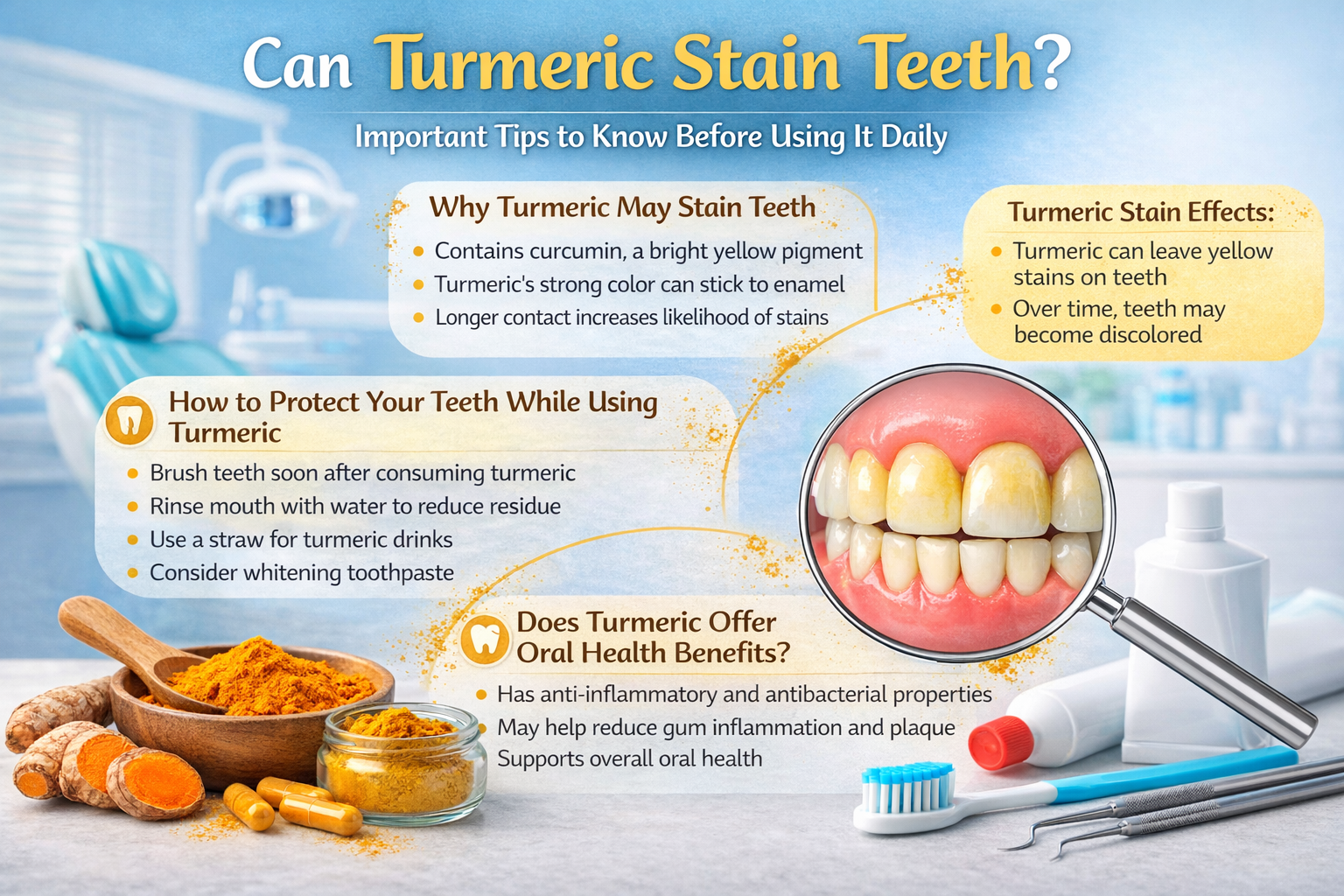
Can Turmeric Actually Stain Teeth?
The honest answer is: yes, turmeric can stain teeth under certain conditions.
If turmeric powder is used frequently, left on teeth for extended periods, or applied to teeth with plaque buildup or enamel wear, staining is more likely. This is why people often ask, can turmeric stain your teeth even though it’s promoted as a whitening agent.
That said, turmeric does not permanently penetrate healthy enamel in the same way as some dark beverages. Any staining is usually superficial and can often be removed with professional cleaning.
Can Turmeric Whiten Teeth or Is That a Myth?
You may have seen claims suggesting turmeric whiten teeth naturally. This idea comes from turmeric’s mild abrasive quality and antibacterial effects.
Turmeric does not chemically bleach teeth like professional whitening treatments. Instead, turmeric teeth whitening claims are based on its ability to help remove surface plaque and stains caused by bacteria. In this way, teeth may appear slightly brighter—but not actually whiter than their natural shade.
Using turmeric to whiten teeth may create a short-term improvement in appearance, but it will not change the intrinsic colour of your enamel.
Also read: How to Stop Tooth Pain Fast at Home at Night
Understanding the Difference: Surface Stains vs. True Whitening
This distinction is important. Surface stains come from food, drinks, and bacteria buildup. Removing them can make teeth look cleaner and brighter.
True whitening involves lightening the internal structure of the tooth, which turmeric cannot do. So while turmeric for whitening teeth may help with surface cleanliness, it should not be confused with professional whitening procedures.
Similarly, while some people ask can turmeric powder whiten teeth, the effect is limited and inconsistent.
Risks and Limitations of Using Turmeric on Teeth
While turmeric is natural, “natural” does not always mean risk-free. Overuse can cause issues such as:
- Temporary yellow staining on enamel or gums
- Abrasive wear if scrubbed aggressively
- Gum irritation if used in high concentration
- Uneven colour if residue is not fully removed
People with thin enamel or existing dental restorations may notice staining more easily.
Another misconception is that daily use guarantees better results. In reality, frequent exposure increases the risk of discolouration rather than whitening.
How to Use Turmeric More Safely
If you choose to use turmeric occasionally, moderation and technique matter. Mixing a small amount with a gentle toothpaste or coconut oil can reduce abrasiveness. Always rinse thoroughly afterward and avoid letting turmeric sit on teeth for extended periods.
It’s also important to maintain good oral hygiene. Brushing twice daily with fluoride toothpaste and flossing regularly reduces plaque, which lowers the chance of staining.
Avoid daily DIY applications, especially if you’re unsure how your teeth will react.
When Professional Dental Advice Is Recommended
If you are concerned about stains, enamel sensitivity, or the effectiveness of home remedies, professional guidance is the safest route. Dentists can assess your enamel health, identify the cause of discolouration, and recommend evidence-based whitening options that won’t harm your teeth.
Professional cleanings can also remove surface stains caused by spices, coffee, or tea—often restoring your smile without the risks associated with DIY remedies.
If you notice yellowing that doesn’t improve with brushing, or if you’re experimenting with natural products regularly, it’s a good idea to seek advice before continuing.
A Balanced Take on Turmeric and Teeth
So, does turmeric stain teeth? It can—especially with frequent or improper use. While turmeric has antibacterial benefits and may help with surface cleanliness, it is not a reliable or proven teeth-whitening solution.
Understanding the difference between marketing claims and real dental outcomes helps you make informed decisions. Natural remedies can support oral care, but they should never replace professional dental advice or evidence-based treatments.
Final Thoughts
Turmeric is a powerful and beneficial spice, but it should be used thoughtfully—especially when it comes to your teeth. If you’re exploring natural oral care options, balance is key. Occasional use may be fine, but daily application can increase the risk of staining and enamel wear.
For safe, long-term results and a confident smile, professional dental guidance remains the most reliable choice. Our dentists can help you achieve healthier, brighter teeth without the guesswork so you can enjoy both natural wellness and lasting oral health.
